Friday, January 31, 2020

Pyrolytic Carbon


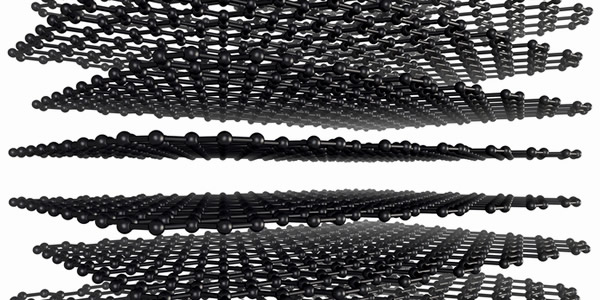
Pyrolytic carbon is a material similar to graphite, but with some covalent bonding between its graphene sheets as a result of imperfections in its production. Pyrolytic carbon is man-made and is not thought to be found in nature.
This image has an empty alt attribute; its file name is images-1.jpg

Thursday, January 30, 2020

Pitch


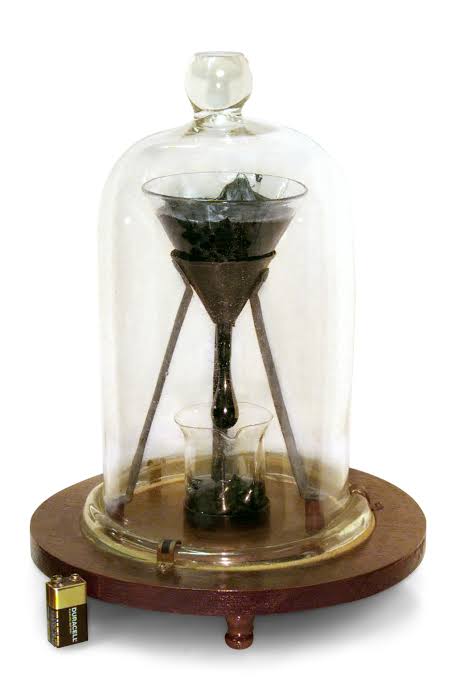
Pitch is a viscoelastic polymer which can be natural or manufactured, derived from petroleum, coal tar, or plants. Various forms of pitch may also be called tar, bitumen, or asphalt. Pitch produced from plants is also known as resin. Some products made from plant resin are also known as rosin.
This image has an empty alt attribute; its file name is images-1-2.jpg

Bitumen


Bitumen, also known as asphalt is a substance that forms through the distillation of crude oil. It has waterproofing and adhesive properties. Bitumen production through distillation removes lighter crude oil components, such as gasoline and diesel, leaving the “heavier” bitumen behind.
This image has an empty alt attribute; its file name is images-4.jpg

Wednesday, January 29, 2020

Fluoride Glass


Fluoride glass is a class of non-oxide optical glasses composed of fluorides of various metals. Due to their low viscosity, it is very difficult to completely avoid the occurrence of any crystallization while processing it through the glass transition. Thus, although heavy metal fluoride glasses exhibit very low optical attenuation, they are not only difficult to manufacture, but are quite fragile, and have poor resistance to moisture and other environmental attacks.
This image has an empty alt attribute; its file name is calcium_270_250x250.jpg

Float Glass

Float glass is a sheet of glass made by floating molten glass on a bed of molten metal, typically tin, although lead and other various low-melting-point alloys were used in the past. This method gives the sheet uniform thickness and very flat surfaces. Modern windows are made from float glass
For more: http://www.globalepisteme.org/Conference/material-science-conference

For abstract submission: http://www.globalepisteme.org/Conference/material-science-conference/submitabstract


Contact us: materials@globalepisteme.com

Carbon Composites


Carbon Composites are those special composites in which both the reinforcing fibers and the matrix material are both pure carbon. Carbon-Carbon Composites are the woven mesh of Carbon-fibers. Carbon-Carbon Composites are used for their high strength and modulus of rigidity.
This image has an empty alt attribute; its file name is idx_carbon-1.jpg

Electrostriction Ceramics

Electrostriction is a property of all dielectric materials, and is caused by displacement of ions in the crystal lattice upon being exposed to an external electric field. Positive ions will be displaced in the direction of the field, while negative ions will be displaced in the opposite direction. This displacement will accumulate throughout the bulk material and result in an overall strain in the direction of the field. The thickness will be reduced in the orthogonal directions characterized by Poisson's ratio. All insulating materials consisting of more than one type of atom will be ionic to some extent due to the difference of electronegativity of the atoms, and therefore exhibit electrostriction.

For more: http://www.globalepisteme.org/Conference/material-science-conference

For abstract submission: http://www.globalepisteme.org/Conference/material-science-conference/submitabstract


Contact us: materials@globalepisteme.com

Electroceramics


Electroceramics can be defined as ceramic materials which are able to perform an electronic function for a particular application. This rather wide umbrella-term includes materials for a wide range of applications, of varying complexity, from relatively simple insulating materials, to complex ferroelectrics.
This image has an empty alt attribute; its file name is electroceramics-min.jpg

Sunday, January 26, 2020

Chalcogenide Glass

Chalcogenide glass is a glass containing one or more chalcogens. Such glasses are covalently bonded materials and may be classified as covalent network solids. Chalcogenides are compound formed predominately from one or more of the chalcogen elements. Various non-oxide glasses have been prepared and characterized in last few decades, thus widening the groups of chalcogen materials used in various optoelectronic glasses. The present review describes the composition of chalcogenide glasses, their synthesis and fabrication, their physical properties and potential applications in optoelectronics.
For more: http://www.globalepisteme.org/Conference/material-science-conference

For abstract submission: http://www.globalepisteme.org/Conference/material-science-conference/submitabstract


Contact us: materials@globalepisteme.com

Bio Glass

Bio glass is known to develop an interfacial bond between the implant. When CaO-P2O5-SiO2 based glass/glass-ceramic is implanted in human body, first a silica-rich gel forms at the surface, due to the selective dissolution of elements which are lost from the surface, including silica. This silica depletion is followed by the migration of calcium and phosphate ions to the silicate gel surface, both from within the bioglass and the tissue fluids, to form a calcium-phosphate layer. The formation of biologically active hydroxycarbonate apatite (HCA) layer is followed by spontaneous bonding of living bone to the substrate. The formation of HCA layer is the key to formation of the bone on glass.
For more: http://www.globalepisteme.org/Conference/material-science-conference

For abstract submission: http://www.globalepisteme.org/Conference/material-science-conference/submitabstract


Contact us: materials@globalepisteme.com

Friday, January 24, 2020

Optical Glass


Optical glass is the base material for the fabrication of spherical lenses, aspheres, prisms, beam splitters, optical fibers, axicons, or other optical components. The photonic industry relies on such components and so on optical glass. Photonics is a key enabling technology for many market segments and applications. The requirements for optical glass are the highest transmission and tight tolerances of not only the optical properties such as refraction and dispersion but also the mechanical properties such as sufficient size and low stress content. In order to achieve the above mentioned specification, a sophisticated melting technology, hot forming processes, annealing procedure, and measurement devices are required. This chapter discusses the most relevant information of these processes.
Oxide Glasses

Oxide glasses containing transition metal oxides are known to exhibit electronic conductivity. Because pure transition metal oxides do not easily form a glass alone, the stability of glassy phases is obtained by the addition of a conventional network
For more: http://www.globalepisteme.org/Conference/material-science-conference

For abstract submission: http://www.globalepisteme.org/Conference/material-science-conference/submitabstract


Contact us: materials@globalepisteme.com

Creep

In materials science, creep is the tendency of a solid material to move slowly or deform permanently under the influence of persistent mechanical stresses. It can occur as a result of long-term exposure to high levels of stress that are still below the yield strength of the material.

For more: http://www.globalepisteme.org/Conference/material-science-conference/

For abstract submission: http://www.globalepisteme.org/Conference/material-science-conference/submitabstract


Contact us: materials@globalepisteme.com